

Nordic style
Danish Hygge interior design
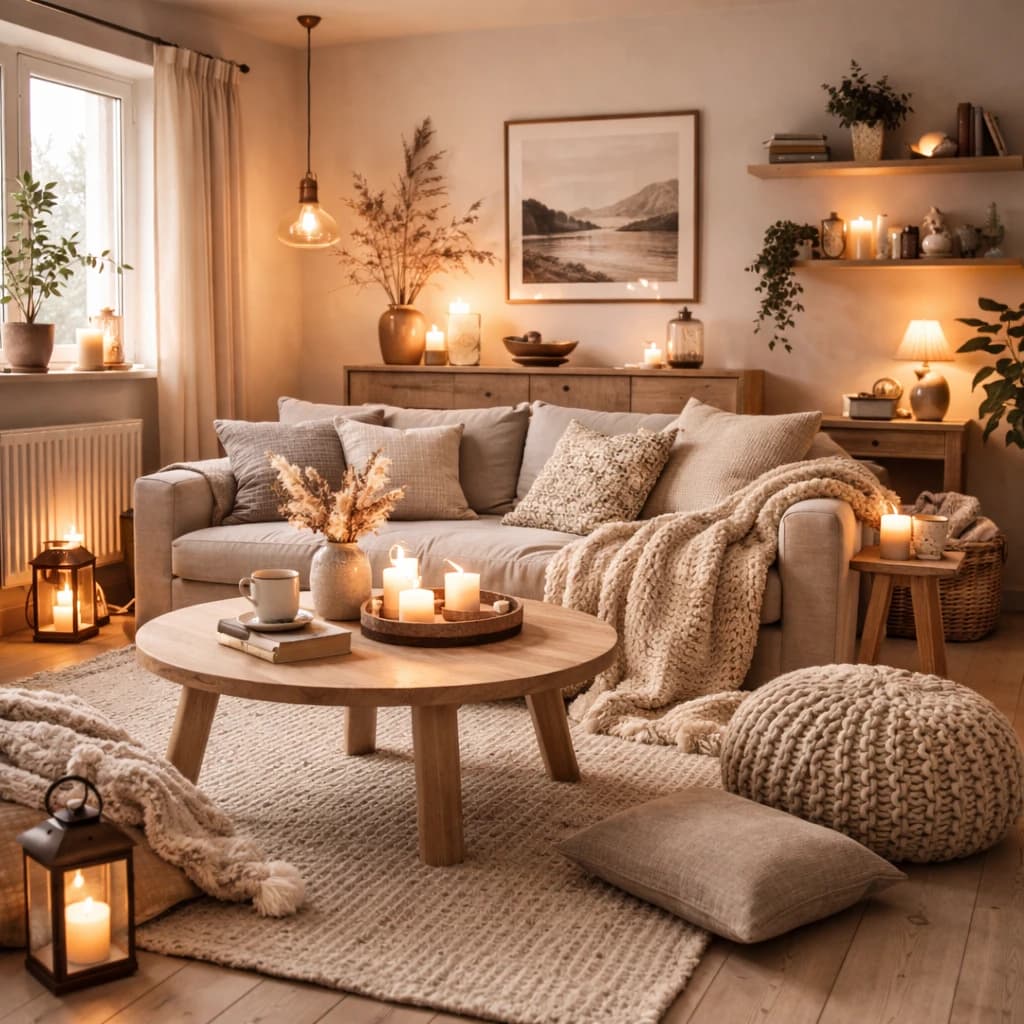
Danish hygge is a way of making a room feel comfortable and sheltered: soft textured fabrics, warm low light, natural wood and places to sit close together. It is less a set of furniture rules than a set of choices about warmth, light and company.
What defines Danish Hygge
- Colors
- Oat, Warm gray, Candle amber, Soft clay, Deep moss, Driftwood
- Materials
- Chunky knitted wool and mohair; Sheepskin and lambswool; Washed linen and brushed cotton
- Key pieces
- A deep sofa with a soft seat and plenty of cushions; A reading chair with a footstool and a blanket over the arm; Several small lamps, including one at floor or knee height
- Best rooms
- Living room, Bedroom, Home office, Kids’ room, Entryway
- In Interify
- Danish Hygge — Cozy textures, warm candlelight & soft blankets
Where Danish Hygge comes from
Hygge is a Danish word, in use since the eighteenth century and borrowed from Norwegian, for the feeling of warm, easy comfort in good company. It describes an atmosphere rather than a style, which is why a hygge room is defined by what it feels like to spend an evening in it rather than by any particular chair.
In interiors it draws on the same Nordic base as Scandinavian design, with pale wood, matte walls and simple shapes, and then adds more: wool and sheepskin in layers, lamps at knee and table height, candles, and seating arranged in a close group rather than around a screen. Long dark winters are the reason all of it exists.
The mood is soft, warm and slightly dim. Compared with a Scandinavian room, a hygge room is less tidy and more upholstered; compared with English country, it has almost no pattern. Lighting is the part most often got wrong: the style depends on many small warm lights instead of one bright one.
The palette
The colors Danish Hygge rooms are built on. Name one in a note and Interify works to it.
- Oat#e8ded0
- Warm gray#b9b2a8
- Candle amber#d9a35f
- Soft clay#c09585
- Deep moss#6f7a63
- Driftwood#9d8974
Materials and key pieces
Materials
- Chunky knitted wool and mohair
- Sheepskin and lambswool
- Washed linen and brushed cotton
- Pale oak, pine and ash
- Unglazed stoneware
- Beeswax candles and glass holders
- Jute and wool rugs, layered
- Rattan and woven baskets
Key pieces
- A deep sofa with a soft seat and plenty of cushions
- A reading chair with a footstool and a blanket over the arm
- Several small lamps, including one at floor or knee height
- Candle holders grouped on a tray or a shelf
- Layered rugs, one wool over one jute
- A low wooden coffee table that takes cups and books
- Open shelving with blankets rather than ornaments
- Heavy linen curtains that fall to the floor
Do and avoid
Do
- Light the room with many small warm sources at different heights
- Layer textiles: a throw on the sofa, a sheepskin on the chair, a rug on a rug
- Arrange seating so people face each other, not a screen
- Keep the palette to warm neutrals so the textures carry the room
- Give the room one honest wood surface to touch
- Leave the candles, books and blankets out; this style allows visible use
Avoid
- A single bright ceiling light, which removes the whole effect
- Cool white bulbs and blue-toned grays
- Slick or glossy surfaces with nothing soft against them
- Formal arrangements where nobody can reach a table
- Loud pattern competing with the textures
- Treating hygge as a shopping list; the lighting matters more than the objects
Rooms Danish Hygge suits
The rooms this style has the most to say in. It works in any room you can photograph.
- Living room
- Bedroom
- Home office
- Kids’ room
- Entryway
Make it Danish Hygge in your own room
Pick Danish Hygge and it restyles the whole photo — furniture, floor, wall color, textiles and lighting — while the walls, windows, doors and the camera angle stay where they are. Mark anything you want changed on top of that and write what it should become.
Notes to try
- Sofa
- “Deep oatmeal sofa with a chunky knitted wool throw and linen cushions”
- Corner
- “Reading chair with a sheepskin over the back and a small floor lamp beside it”
- Coffee table
- “Low pale oak table with a tray of lit candles and a stack of books”
- Floor
- “Wool rug layered over a larger jute rug in warm neutrals”
- Window
- “Floor-length heavy linen curtains in oat, hanging in soft folds”
Photograph the room
Straight on, in daylight, with the whole wall in frame. A phone photo is enough.
Pick Danish Hygge
Choose Danish Hygge from the style picker, or write your own instruction for the whole room instead.
Mark and write
Draw around each piece or surface you want changed and write what it should become, as in the notes above.
What it costs to try
- Styles
- 20 interior style presets, or describe your own
- Free to start
- 3 credits on signup, no card needed
- Cost of a version
- 1 credit. Packs start at $9 for 30 credits, down to $0.16 a credit
- Time per version
- Usually about a minute
Questions about Danish Hygge
What is hygge in interior design?
Hygge is a Danish word for warm, easy comfort in good company, and in interiors it describes rooms built for that feeling: soft layered textiles, warm low light from several small lamps and candles, natural wood, and seating arranged close together. It is an atmosphere rather than a fixed style, so the lighting and the textures matter more than any particular piece of furniture.
How is hygge different from Scandinavian style?
They share a palette and a set of materials, but they aim at different things. Scandinavian design is about light, usefulness and restraint, so rooms stay pale and tidy. Hygge is about shelter and comfort, so the same room gets more cushions, more blankets, dimmer light and a less orderly surface. A hygge room is a Scandinavian room you are allowed to use.
What colors work for a hygge room?
Warm neutrals: oat, cream, warm gray, driftwood and soft clay, with deep moss or muted brown as a darker note and amber from candlelight and lamps. Cool blue-grays work against the style because they read as daylight. Keep the walls quiet so the woven and knitted textures are what the eye notices.
How do I make a room hygge without buying anything?
Change the light first. Turn the ceiling light off, use two or three lamps with warm bulbs at different heights, and add candles if you can do so safely. Then pull the seating closer together, bring out the blankets you already own, and clear the hard surfaces of everything except what you use in the evening. Nothing in that list needs to be bought.
Is hygge only for winter?
The word is associated with winter because that is when Danes need it most, but the principles are seasonal only in degree. In summer the same room works with lighter linens instead of wool, fewer layers on the sofa and daylight doing the work, while the close seating and the warm evening light stay the same.
Styles like this one
- Scandinavian styleThe same Nordic materials, kept lighter, cooler and tidier
- Norwegian Cabin styleShares wool, pine and winter warmth, with rougher surfaces and more stone
- Farmhouse styleAnother warm, informal style built on wood and plain textiles
- Rustic styleBoth value visible natural material and low, warm light over polish
- All stylesEvery one of the 20 presets, grouped as the picker groups them.
See your room in Danish Hygge
Upload a photo, pick Danish Hygge and mark what should change. You start with 3 credits and no card.