

Nordic style
Norwegian Cabin interior design
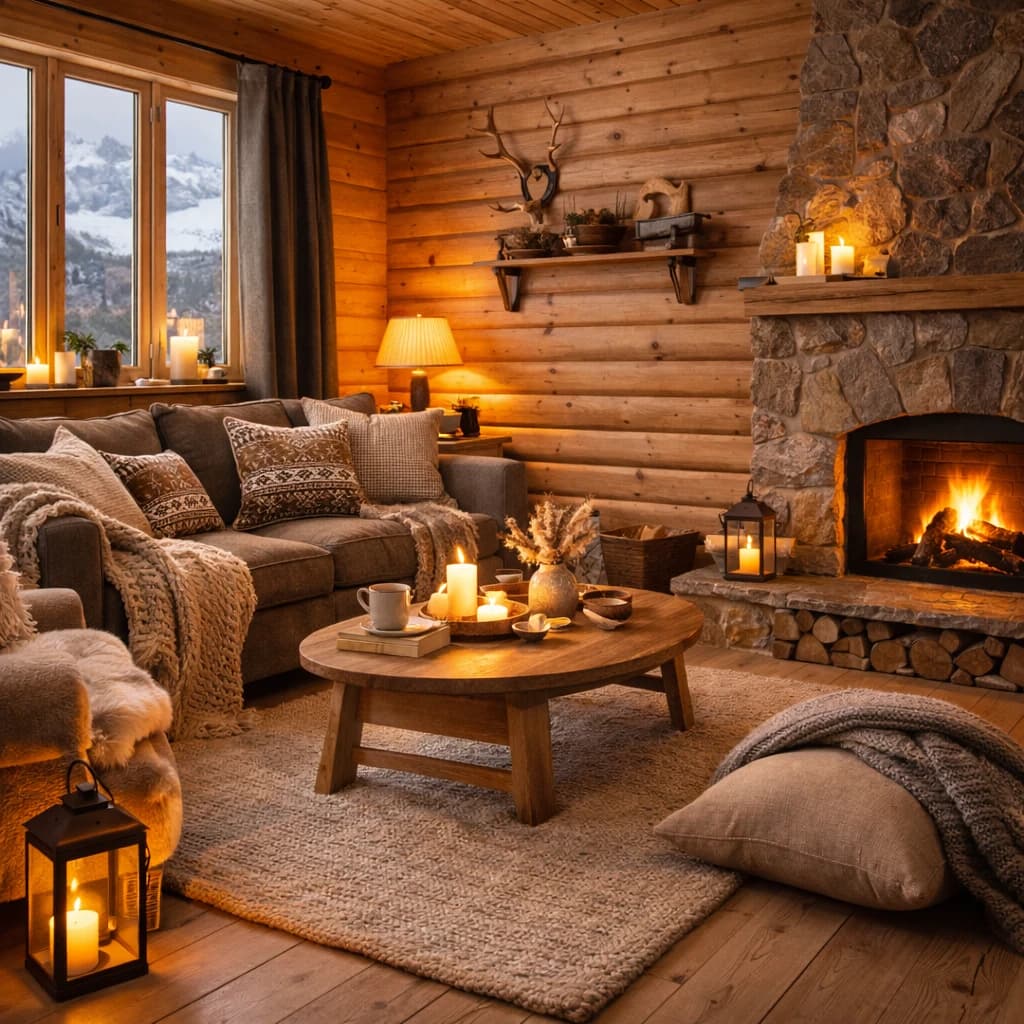
Norwegian cabin style, after the hytte found in the mountains and along the coast, is an interior built almost entirely of pine, warmed with wool textiles and grounded with natural stone. Rooms are small, low and lined in wood on every surface.
What defines Norwegian Cabin
- Colors
- Raw pine, Aged wood, Natural wool, Slate gray, Lichen green, Deep red
- Materials
- Pine boards, logs and visible beams; Wool blankets and knitted cushions; Sheepskin and reindeer hide
- Key pieces
- A wood-burning stove or stone hearth; Pine-lined walls and ceiling with visible joints; Built-in benches and bunks with wool cushions
- Best rooms
- Living room, Bedroom, Kids’ room, Entryway, Kitchen
- In Interify
- Norwegian Cabin — Pine wood, wool textiles & mountain lodge warmth
Where Norwegian Cabin comes from
The Norwegian cabin descends from timber building traditions that go back to the stave churches and the log-built farms of the countryside, where walls, floor and ceiling were all worked from the same local pine. The form was practical: solid wood holds heat, and a small room with a low ceiling and a stove in it can be warmed quickly after a cold journey.
In the twentieth century the hytte became a leisure building, and the interior settled into its current pattern: pine boards or visible logs, a hearth or wood stove in stone, built-in bunks and benches, and wool from the local sheep in blankets, cushions and the knitted patterns used on sweaters. Newer cabins keep the material palette while adding large windows toward the view.
The mood is sheltered and robust. Everything is meant to be sat on in outdoor clothes, so surfaces are hard-wearing and nothing is precious. Compared with Danish hygge the finish is rougher and the wood is far more dominant; compared with American rustic style the carpentry is tighter and the detailing plainer.
The palette
The colors Norwegian Cabin rooms are built on. Name one in a note and Interify works to it.
- Raw pine#d2b188
- Aged wood#8a6b4c
- Natural wool#e4ded1
- Slate gray#6c6f70
- Lichen green#7f8a6c
- Deep red#8e3b32
Materials and key pieces
Materials
- Pine boards, logs and visible beams
- Wool blankets and knitted cushions
- Sheepskin and reindeer hide
- Natural stone and slate
- Cast iron stoves and fittings
- Birch bark and woven baskets
- Leather, worn rather than polished
- Enamelware and stoneware
Key pieces
- A wood-burning stove or stone hearth
- Pine-lined walls and ceiling with visible joints
- Built-in benches and bunks with wool cushions
- A solid pine table with a bench rather than chairs
- Wool blankets in traditional knitted patterns
- Sheepskins over bench seats and the floor
- Iron hooks, lanterns and candle holders
- A ladder or steep stair to a sleeping loft
Do and avoid
Do
- Let pine cover more than you expect: walls and ceiling as well as the floor
- Keep the wood matte and natural, or treat it with a light soap or lye finish
- Anchor the room with one stone element, usually around the stove
- Use wool for every soft surface, in undyed cream, gray and one deep red
- Build seating in where you can, so the small room stays walkable
- Keep the window frames narrow and the view uninterrupted
Avoid
- Orange varnish or high-gloss lacquer on the pine
- Painting over all the wood, which removes the style's single material
- Fine or delicate furniture that cannot take wet coats and boots
- Cool white light, which turns warm pine a sickly yellow
- Printed cottons and florals from other country styles
- Imitation antler and lodge souvenirs standing in for real materials
Rooms Norwegian Cabin suits
The rooms this style has the most to say in. It works in any room you can photograph.
- Living room
- Bedroom
- Kids’ room
- Entryway
- Kitchen
Make it Norwegian Cabin in your own room
Pick Norwegian Cabin and it restyles the whole photo — furniture, floor, wall color, textiles and lighting — while the walls, windows, doors and the camera angle stay where they are. Mark anything you want changed on top of that and write what it should become.
Notes to try
- Walls
- “Line the walls and ceiling with untreated pine boards, visible joints”
- Fireplace
- “Black cast iron wood stove on a natural slate hearth”
- Bench
- “Built-in pine bench with cream wool cushions and a sheepskin”
- Bed
- “Wool blanket in a gray and cream knitted pattern over a pine bed frame”
- Floor
- “Wide pine floorboards, matte and unvarnished, with a wool runner”
Photograph the room
Straight on, in daylight, with the whole wall in frame. A phone photo is enough.
Pick Norwegian Cabin
Choose Norwegian Cabin from the style picker, or write your own instruction for the whole room instead.
Mark and write
Draw around each piece or surface you want changed and write what it should become, as in the notes above.
What it costs to try
- Styles
- 20 interior style presets, or describe your own
- Free to start
- 3 credits on signup, no card needed
- Cost of a version
- 1 credit. Packs start at $9 for 30 credits, down to $0.16 a credit
- Time per version
- Usually about a minute
Questions about Norwegian Cabin
What is Norwegian cabin style?
Norwegian cabin style, from the mountain and coastal hytte, is an interior lined in pine on the walls, ceiling and floor, warmed with wool blankets and sheepskins, and anchored by a stone hearth or a cast iron stove. Rooms are small and low, furniture is often built in, and every surface is meant to survive outdoor clothes and wet boots.
What is the difference between a Norwegian cabin and rustic style?
They share raw wood, stone and warmth, but Norwegian cabin interiors are tighter and plainer: machined pine boards, built-in benches, little ornament and a restrained palette. American rustic allows rougher, mixed woods, more decoration and bigger rooms. Put simply, the Norwegian version is carpentry and the rustic version is lumber.
Does all that wood make a room feel dark?
It can, and the traditional answers are light-toned pine, a matte or soap finish rather than varnish, and plenty of warm electric light. Modern cabins add large windows toward the view, which changes the room completely. If you want the material without the gloom, line three walls and leave the fourth, or keep the ceiling pale.
What colors go with pine walls?
Undyed wool cream, gray and black read cleanly against warm pine, and one deep red or lichen green is traditional as the only strong color. Avoid cool blue-grays and pure brilliant white, which make the pine look orange by contrast. Slate and natural stone are the safest hard surfaces to put next to it.
Can I get this look in an apartment?
Partly. Pine-lined walls and a wood stove are hard to add to an apartment, but the textiles, the palette and the lighting travel: wool blankets, sheepskin, undyed cushions, matte pine furniture and warm low light. Mark a wall and the sofa in a photo of your own room and try the pine lining there first, before deciding whether the full treatment suits the space.
Styles like this one
- Rustic styleThe closest relative: raw wood, stone and cabin warmth with rougher carpentry
- Danish Hygge styleShares the wool, the candlelight and the winter comfort
- Scandinavian styleThe same Nordic woods and restraint, lighter and built for daylight
- Farmhouse styleAnother working building turned comfortable, with painted boards
- All stylesEvery one of the 20 presets, grouped as the picker groups them.
See your room in Norwegian Cabin
Upload a photo, pick Norwegian Cabin and mark what should change. You start with 3 credits and no card.