

Nordic style
Scandinavian interior design
Scandinavian interior design is a restrained, light-filled style built on pale wood, white or off-white walls and simple functional furniture. It keeps rooms bright and uncluttered, with warmth coming from wood and textiles rather than from color.
What defines Scandinavian
- Colors
- Soft white, Pale oak, Birch, Cool gray, Charcoal, Muted sage
- Materials
- Pale oak, ash, birch and pine; White and off-white matte paint; Wool and sheepskin
- Key pieces
- A light gray or cream sofa with slim wooden legs; A spindle or paper-cord dining chair in pale wood; A round pedestal or three-leg side table
- Best rooms
- Living room, Bedroom, Kitchen, Home office, Kids’ room
- In Interify
- Scandinavian — Light wood, white walls & minimalist warmth
Where Scandinavian comes from
The style grew out of Nordic design reform in the first half of the twentieth century, when Danish, Swedish, Norwegian and Finnish designers set out to make well-made furniture that ordinary households could afford. The 1930 Stockholm Exhibition and the Lunning Prize of the 1950s pushed the same idea: honest materials, useful shapes and nothing applied for show.
Climate explains the rest. At northern latitudes daylight is scarce for much of the year, so walls are kept pale to reflect what there is, windows are left largely bare, and surfaces stay matte. Pine, birch, ash and pale oak are the local woods, and they give the style its light, slightly yellow warmth.
The mood is calm and practical rather than austere. A Scandinavian room has fewer objects than most, but the ones that remain are tactile: wool, sheepskin, linen, ceramic and wood. Compared with pure minimalism it is warmer and more human; compared with Danish hygge it is cooler and tidier.
The palette
The colors Scandinavian rooms are built on. Name one in a note and Interify works to it.
- Soft white#f4f2ee
- Pale oak#d9c3a3
- Birch#e7d9c3
- Cool gray#b4b4b0
- Charcoal#3a3b3a
- Muted sage#9fae9d
Materials and key pieces
Materials
- Pale oak, ash, birch and pine
- White and off-white matte paint
- Wool and sheepskin
- Natural and washed linen
- Stoneware and matte ceramic
- Woven paper cord and cane
- Black powder-coated metal
- Light, wide-plank or whitewashed floors
Key pieces
- A light gray or cream sofa with slim wooden legs
- A spindle or paper-cord dining chair in pale wood
- A round pedestal or three-leg side table
- An open shelf or sideboard in oak, kept half empty
- A paper or opal glass pendant over the table
- A sheepskin over the arm of a chair
- A flat-woven wool rug in a muted tone
- A few stoneware vases and a single stem
Do and avoid
Do
- Keep walls and ceilings pale and matte so the daylight spreads
- Choose one pale wood and repeat it, in the floor, the legs and the shelving
- Leave negative space: an empty stretch of wall is part of the style
- Add warmth with texture, not color: wool, sheepskin, linen, unglazed clay
- Use one black or charcoal accent to give the pale room an outline
- Keep the window mostly bare, or hang sheer linen that lets light through
Avoid
- Dark red-toned woods such as cherry and mahogany
- Heavy pattern, swags and ornament
- Cool blue-white bulbs; keep the light warm even if the palette is cool
- Filling every shelf, which removes the quiet the style depends on
- Glossy surfaces, which look hard next to matte wood
- Many competing accent colors, which break the neutral base
Rooms Scandinavian suits
The rooms this style has the most to say in. It works in any room you can photograph.
- Living room
- Bedroom
- Kitchen
- Home office
- Kids’ room
Make it Scandinavian in your own room
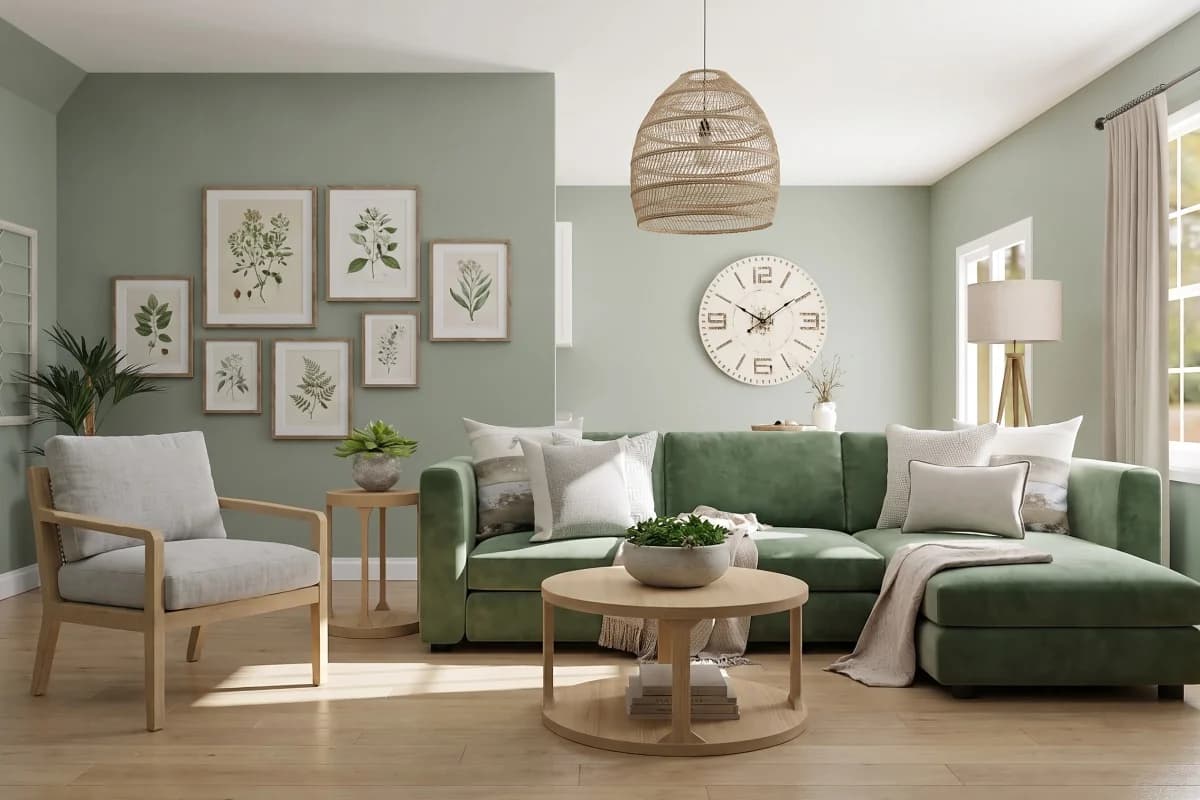
Pick Scandinavian and it restyles the whole photo — furniture, floor, wall color, textiles and lighting — while the walls, windows, doors and the camera angle stay where they are. Mark anything you want changed on top of that and write what it should become.
Notes to try
- Walls
- “Soft white matte walls, no pattern, white trim”
- Floor
- “Wide-plank pale oak floor with a matte finish”
- Sofa
- “Light gray wool sofa with slim pale oak legs and linen cushions”
- Ceiling light
- “White paper pendant lamp hanging low over the table”
- Shelf
- “Open pale oak shelf with a few stoneware vases, mostly empty”
Photograph the room
Straight on, in daylight, with the whole wall in frame. A phone photo is enough.
Pick Scandinavian
Choose Scandinavian from the style picker, or write your own instruction for the whole room instead.
Mark and write
Draw around each piece or surface you want changed and write what it should become, as in the notes above.
What it costs to try
- Styles
- 20 interior style presets, or describe your own
- Free to start
- 3 credits on signup, no card needed
- Cost of a version
- 1 credit. Packs start at $9 for 30 credits, down to $0.16 a credit
- Time per version
- Usually about a minute
Questions about Scandinavian
What is Scandinavian interior design?
Scandinavian interior design is a style from Denmark, Sweden, Norway and Finland built on pale wood, white or off-white walls, simple functional furniture and natural textiles. Rooms are kept bright and uncluttered because northern daylight is limited, and warmth comes from wool, sheepskin, linen and wood rather than from strong color or pattern.
What is the difference between Scandinavian and Japandi style?
Japandi is a recent hybrid term, not a historical style: it describes rooms that combine Scandinavian pale wood and comfort with Japanese restraint, lower furniture and darker wood tones. Scandinavian rooms are lighter and softer; Japandi rooms are usually darker, more sparing and more deliberately composed. Interify has presets for Scandinavian and for Japanese, so for a Japandi result pick whichever preset is closer to your room and describe the rest in the instruction for the whole room.
What colors go with Scandinavian style?
A neutral base of soft white, pale gray and the yellow-warm tone of oak, ash or birch, with charcoal or black as an outline. Muted greens, dusty blues and clay tones work as accents in small amounts. Pure brilliant white can look clinical next to pale wood, so most Scandinavian whites are slightly warm or slightly gray.
Is Scandinavian design the same as minimalism?
No. Both keep rooms uncluttered, but minimalism is about reduction for its own sake, often with hard surfaces and no visible storage, while Scandinavian design is about usefulness and comfort in poor daylight. A Scandinavian room will happily hold a sheepskin, a stack of books and a houseplant, which a strict minimalist room would not.
Does Scandinavian style work in a dark room?
It suits one better than most styles, because it was developed for exactly that problem. Keep the walls and ceiling pale and matte, choose a pale floor if you can, leave the window as clear as privacy allows, and add several warm lamps at different heights rather than one ceiling light. Mark the walls, floor and window in one photo in Interify to see the three changes together.
Styles like this one
- Minimalist styleShares the restraint and open space; minimalism goes further and keeps less wood and texture
- Danish Hygge styleThe same Nordic materials with the warmth and candlelight turned up
- Japanese styleBoth value restraint, natural wood and low furniture, which is why the two are often combined
- Mid-Century Modern styleOverlapping period and furniture shapes, with warmer woods and bolder color
- All stylesEvery one of the 20 presets, grouped as the picker groups them.
See your room in Scandinavian
Upload a photo, pick Scandinavian and mark what should change. You start with 3 credits and no card.