

American style
Coastal interior design
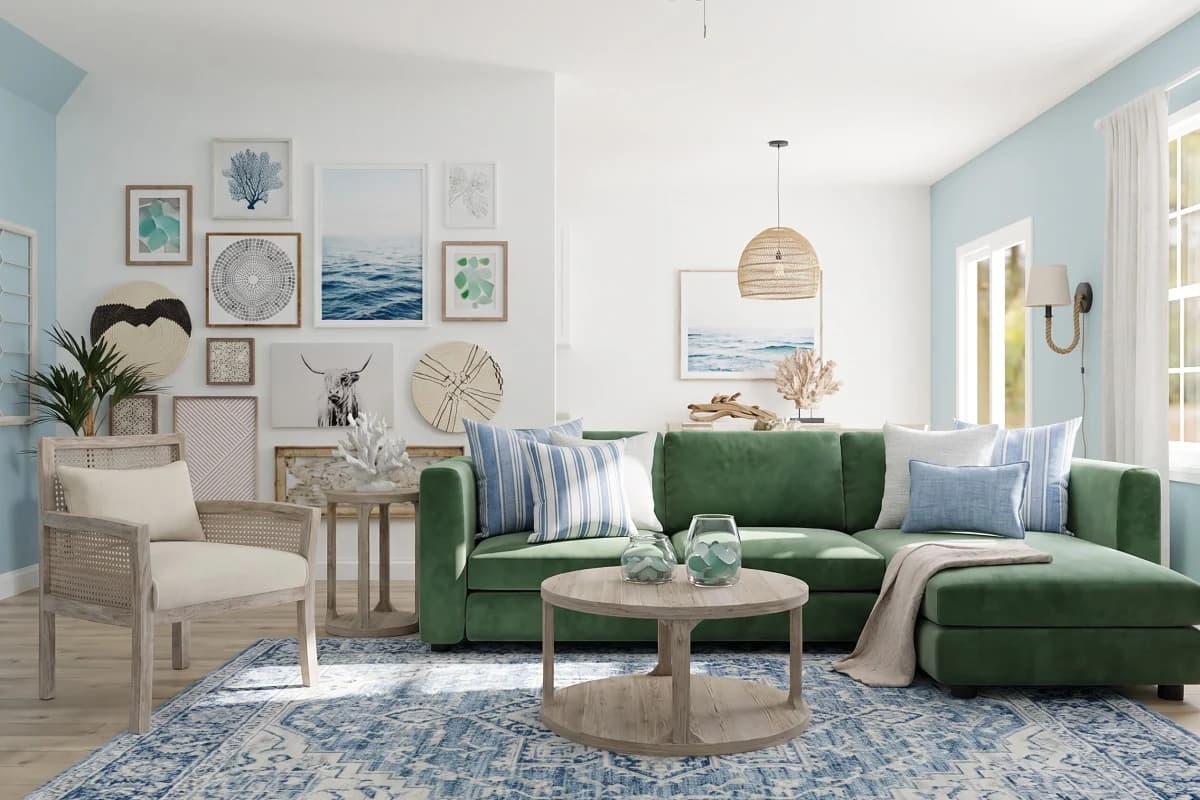
Coastal interior design is a light, airy style built on blues and whites, natural textures and as much daylight as the room can take. It borrows from seaside houses in New England and on the Atlantic coast, where rooms had to survive sand, salt and wet swimsuits.
What defines Coastal
- Colors
- Shell white, Sea glass, Denim blue, Navy, Dune sand, Driftwood gray
- Materials
- Painted shiplap, beadboard and tongue-and-groove; Washed linen and cotton slipcovers; Sisal, jute and seagrass matting
- Key pieces
- A deep sofa with washable loose covers in white or natural linen; A rattan or cane armchair; A sisal or jute rug over a pale floor
- Best rooms
- Living room, Bedroom, Bathroom, Kitchen, Entryway
- In Interify
- Coastal — Blues & whites, natural textures & airy spaces
Where Coastal comes from
The style comes from summer houses rather than from grand ones. Painted board walls, slipcovered furniture, sisal matting and bare floors were all practical answers to a house used hard for three months a year and then shut up, and the loose white covers that now read as elegant were originally there so they could be washed.
Its palette is borrowed directly from the view: white and off-white for sand and painted wood, the blues of water and sky, and the gray-greens of dune grass. Twentieth-century decorating turned that into a recognizable style, and regional versions followed, from the deep blues of New England to the paler, sun-bleached Hamptons look and the brighter tropical variants.
The mood is relaxed, bright and uncluttered. Furniture is low and soft, windows are left as clear as possible, and texture replaces pattern: rope, rattan, linen, jute and unfinished wood. Compared with Mediterranean interiors it is cooler and far more upholstered; compared with farmhouse it swaps warm neutrals for blue and white.
The palette
The colors Coastal rooms are built on. Name one in a note and Interify works to it.
- Shell white#f6f4ef
- Sea glass#aec6c4
- Denim blue#4c6c8c
- Navy#263a52
- Dune sand#ddcfb6
- Driftwood gray#a8a49b
Materials and key pieces
Materials
- Painted shiplap, beadboard and tongue-and-groove
- Washed linen and cotton slipcovers
- Sisal, jute and seagrass matting
- Rattan, cane and wicker
- Bleached and weathered oak and teak
- Rope, in handles, lights and detail
- Glass, clear and recycled
- Unlacquered brass and galvanized metal
Key pieces
- A deep sofa with washable loose covers in white or natural linen
- A rattan or cane armchair
- A sisal or jute rug over a pale floor
- A painted board wall or ceiling
- A weathered wood or glass-topped coffee table
- Woven or rope pendant lights
- Striped cushions and a lightweight throw
- Simple glass vessels with grasses or branches
Do and avoid
Do
- Keep the walls and ceiling light so the room holds the daylight
- Choose one blue and use it at two or three strengths rather than many blues
- Replace pattern with texture: jute, linen, rattan, rope
- Leave the floor pale, painted, bleached or matted
- Dress windows with sheer linen, woven blinds or nothing
- Keep surfaces clear, so the room reads as airy rather than decorated
Avoid
- Nautical novelty: anchors, ship wheels, oars and lifebuoys as decor
- Dark heavy woods and formal polished furniture
- Thick blackout curtains in a room whose point is light
- Saturated primary blue with pure brilliant white, which looks harsh
- Shiny chrome; unlacquered brass or galvanized metal suits the salt air
- Wall-to-wall carpet, which the original houses never had
Rooms Coastal suits
The rooms this style has the most to say in. It works in any room you can photograph.
- Living room
- Bedroom
- Bathroom
- Kitchen
- Entryway
Make it Coastal in your own room
Pick Coastal and it restyles the whole photo — furniture, floor, wall color, textiles and lighting — while the walls, windows, doors and the camera angle stay where they are. Mark anything you want changed on top of that and write what it should become.
Notes to try
- Sofa
- “Deep sofa with loose washed white linen covers and striped blue cushions”
- Walls
- “Painted white tongue-and-groove boards up to the ceiling”
- Floor
- “Large flat sisal rug over a pale bleached oak floor”
- Armchair
- “Rattan armchair with a natural linen seat cushion”
- Window
- “Sheer white linen curtains and a woven roll-up blind”
Photograph the room
Straight on, in daylight, with the whole wall in frame. A phone photo is enough.
Pick Coastal
Choose Coastal from the style picker, or write your own instruction for the whole room instead.
Mark and write
Draw around each piece or surface you want changed and write what it should become, as in the notes above.
What it costs to try
- Styles
- 20 interior style presets, or describe your own
- Free to start
- 3 credits on signup, no card needed
- Cost of a version
- 1 credit. Packs start at $9 for 30 credits, down to $0.16 a credit
- Time per version
- Usually about a minute
Questions about Coastal
What is coastal interior design?
Coastal interior design is a light, relaxed style drawn from seaside summer houses: blues and whites, painted board walls, slipcovered upholstery, natural textures such as sisal, rattan and linen, and as much daylight as the room allows. Texture does the work that pattern does in other styles, and surfaces are kept clear so the room feels airy.
What is the difference between coastal and nautical style?
Coastal takes its palette and materials from the shoreline: light, texture, blue and white, worn wood. Nautical takes its motifs from boats: anchors, rope knots, ship wheels, red and navy stripes and brass portholes. Coastal rooms reference the place; nautical rooms reference the equipment. Most designers treat nautical decor as the thing to avoid when aiming for coastal.
What colors are coastal interiors?
A base of shell white and off-white with sand and driftwood gray, then one blue family carried through the room: sea glass and pale aqua for a soft version, denim and navy for a stronger one. Keep the whites slightly warm or soft rather than brilliant, which stops the blue looking harsh, and let the greens of dune grass appear in plants and textiles.
How do I get a coastal look without living near the sea?
Treat it as a light-and-texture style rather than a theme. Pale walls, a jute or sisal rug, loose linen covers, one rattan piece and clear windows will read coastal anywhere. Skip the shells and the signs. Mark the sofa, the floor and the window in a photo of your own room and see which of the three changes the room most.
Does coastal style work in a small or dark room?
In a small room, yes: pale colors, slim rattan furniture and clear windows all help it feel larger. A dark room is harder, because the style depends on daylight. If the room is north-facing, choose the warmer end of the palette, sand and shell rather than cool white, and add several warm lamps, or the blues will turn gray.
Styles like this one
- Mediterranean styleThe other seaside style: warmer, harder and built around shade rather than light
- Farmhouse styleShares painted boards, slipcovers and plain practical surfaces
- Scandinavian styleBoth keep rooms pale, bare-windowed and textural rather than patterned
- Bohemian styleRattan, woven texture and plants are common to both
- All stylesEvery one of the 20 presets, grouped as the picker groups them.
See your room in Coastal
Upload a photo, pick Coastal and mark what should change. You start with 3 credits and no card.