

Eclectic style
Bohemian interior design
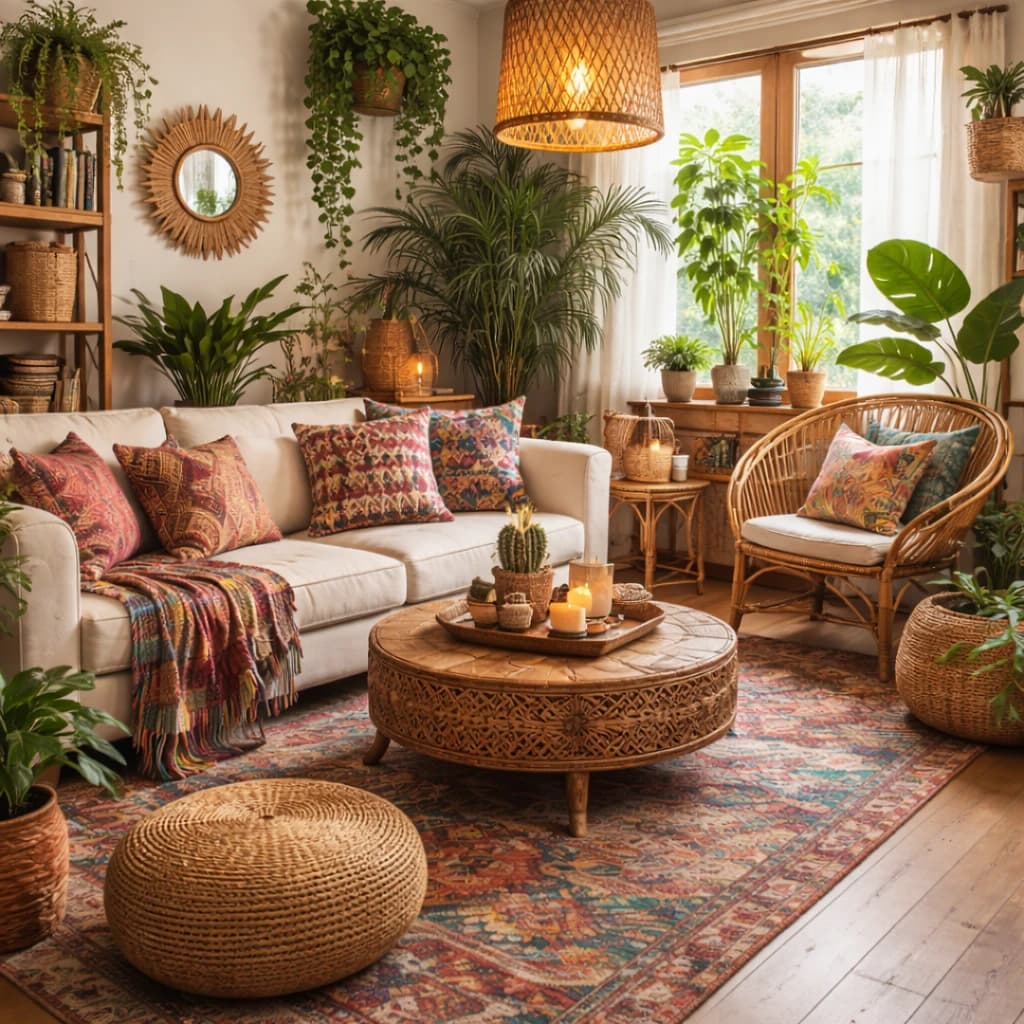
Bohemian interior design is a layered, informal style built on colorful textiles, plants and furniture collected from different places and periods. It is the opposite of a matched scheme: pattern is mixed on purpose, and the room is meant to look lived in and personal.
What defines Bohemian
- Colors
- Warm cream, Terracotta, Saffron, Indigo, Fern green, Plum
- Materials
- Kilim, suzani and block-printed cotton; Macramé, fringe and tassels; Rattan, cane and wicker
- Key pieces
- Low seating: floor cushions, a daybed or a deep sofa; A rattan or peacock chair; Layered rugs in different patterns
- Best rooms
- Living room, Bedroom, Home office, Kids’ room, Entryway
- In Interify
- Bohemian — Colorful textiles, plants & eclectic mix
Where Bohemian comes from
The word comes from nineteenth-century Paris, where bohémien described artists and writers living outside respectable society, often in rooms furnished with whatever was cheap and interesting. That association, of creative life with unmatched furniture and borrowed objects, is what the style still trades on.
The version most people recognize was shaped in the 1960s and 1970s, when travel, imported textiles and a rejection of suburban matching sets came together: kilims and Moroccan rugs on the floor, macramé and rattan, floor cushions, low seating and houseplants in quantity. Each revival since has added its own layer without changing the premise.
The mood is warm, dense and relaxed. Where most styles reduce, bohemian accumulates, so the discipline is in the handling rather than the editing: a palette that holds the patterns together, a consistent scale, and enough plain surface for the eye to rest. Textiles from living craft traditions, bought from the people who make them, hold their value in a room far better than generic printed copies.
The palette
The colors Bohemian rooms are built on. Name one in a note and Interify works to it.
- Warm cream#f0e6d6
- Terracotta#b5654a
- Saffron#cf9a3e
- Indigo#3a4b73
- Fern green#5f7d53
- Plum#73405a
Materials and key pieces
Materials
- Kilim, suzani and block-printed cotton
- Macramé, fringe and tassels
- Rattan, cane and wicker
- Mango, teak and reclaimed wood
- Velvet and embroidered cushions
- Brass, copper and hammered metal
- Terracotta and glazed pottery
- Jute and layered wool rugs
Key pieces
- Low seating: floor cushions, a daybed or a deep sofa
- A rattan or peacock chair
- Layered rugs in different patterns
- A gallery wall of unmatched frames and textiles
- Plants at several heights, including hanging ones
- A low wooden coffee table, carved or reclaimed
- Woven baskets and a brass tray
- Lanterns, string lights and lamps with patterned shades
Do and avoid
Do
- Hold the mix together with a repeated palette: two or three colors across every pattern
- Keep one large surface plain so the room has somewhere to rest
- Vary the pattern scale: one large, one medium, one small
- Go up as well as out: shelves, hanging plants, a tall mirror
- Buy craft textiles from the makers or regions that produce them where you can
- Light the room low and warm, from several points
Avoid
- Buying a boho set in one go; the style depends on things arriving over time
- Generic tribal prints with no origin, which read as costume
- Every pattern at the same scale and strength
- So many objects that the room becomes hard to clean or use
- Sacred or ceremonial objects used as decoration
- Cool gray walls, which deaden the warm colors
Rooms Bohemian suits
The rooms this style has the most to say in. It works in any room you can photograph.
- Living room
- Bedroom
- Home office
- Kids’ room
- Entryway
Make it Bohemian in your own room
Pick Bohemian and it restyles the whole photo — furniture, floor, wall color, textiles and lighting — while the walls, windows, doors and the camera angle stay where they are. Mark anything you want changed on top of that and write what it should become.
Notes to try
- Floor
- “Layer a patterned kilim rug in terracotta and indigo over a large jute rug”
- Sofa
- “Deep cream sofa with embroidered and velvet cushions in saffron and plum”
- Corner
- “Rattan peacock chair with a sheepskin and a hanging plant above it”
- Wall
- “Gallery wall of mismatched frames and one woven textile hanging”
- Window
- “Hanging plants at three heights across the window”
Photograph the room
Straight on, in daylight, with the whole wall in frame. A phone photo is enough.
Pick Bohemian
Choose Bohemian from the style picker, or write your own instruction for the whole room instead.
Mark and write
Draw around each piece or surface you want changed and write what it should become, as in the notes above.
What it costs to try
- Styles
- 20 interior style presets, or describe your own
- Free to start
- 3 credits on signup, no card needed
- Cost of a version
- 1 credit. Packs start at $9 for 30 credits, down to $0.16 a credit
- Time per version
- Usually about a minute
Questions about Bohemian
What is bohemian interior design?
Bohemian interior design is a layered, informal style built on colorful textiles, plants and furniture from different places and periods, mixed on purpose rather than matched. Low seating, layered rugs, rattan, brass and a dense gallery wall are typical, and the room is meant to look collected over time and personal to whoever lives in it.
How do I mix patterns in a boho room without it looking messy?
Use two rules. First, repeat a palette: let every pattern share two or three colors, even if the motifs are unrelated. Second, vary the scale: one large pattern, one medium and one small, rather than three of the same size. Then leave one large surface plain, usually the walls or the sofa, so the eye has somewhere to rest.
What colors are bohemian interiors?
Warm and saturated, on a cream or sand base: terracotta, saffron and ochre, indigo and teal, fern green, plum and rust, with brass and natural wood between them. The warm base is what lets several strong colors sit together. Cool gray walls fight the palette and make the textiles look dusty.
What is the difference between bohemian and eclectic style?
Bohemian is a particular kind of eclectic: warm colors, craft textiles, plants, low seating and a 1970s inheritance. Eclectic is the broader approach of mixing styles and periods, and it can be cool, formal or modern. An eclectic room might pair a Ming chair with a plastic lamp; a bohemian room has a palette and a texture you can predict.
Does bohemian style work in a small room?
It can, if it goes upward rather than outward. Hanging plants, a tall mirror, wall textiles and shelves give the layering the style needs without filling the floor. Keep the furniture low and few, choose one large pattern rather than many small ones, and keep the walls plain. Try the rug and the wall separately on a photo of your room to see which carries more.
Styles like this one
- Eclectic styleThe same layered mixing, with no particular palette or regional reference
- Coastal styleShares rattan, plants and woven texture, in a cooler and sparer key
- Balinese styleCarved wood, rattan and heavy planting appear in both
- English Country styleAnother style built on accumulation and pattern, more formal and more floral
- All stylesEvery one of the 20 presets, grouped as the picker groups them.
See your room in Bohemian
Upload a photo, pick Bohemian and mark what should change. You start with 3 credits and no card.